
What Is OMVIC and Why It Matters When Buying a Used Car in Ontario
What Is OMVIC and Why It Matters When Buying a Used Car in Ontario
Posted on March 28, 2026
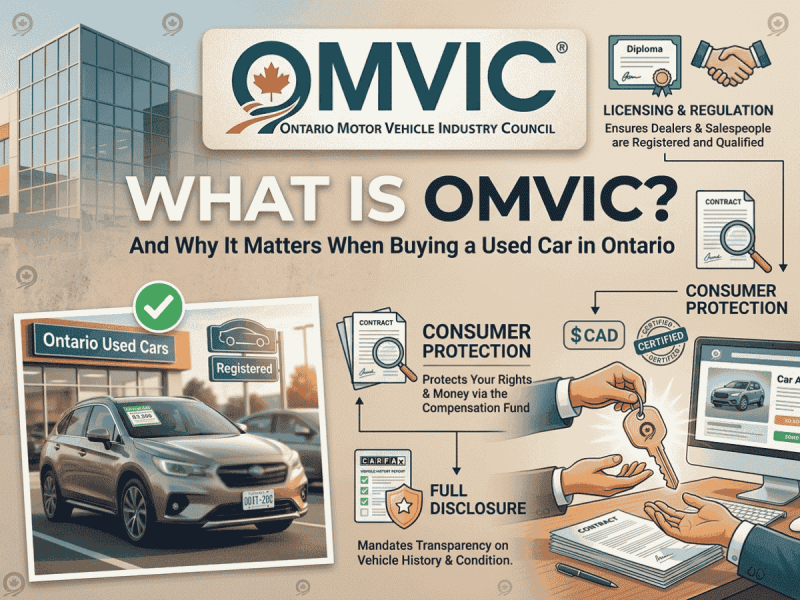
Most people don't think about OMVIC until something has already gone wrong. By that point, they're trying to figure out what options they have and how to get their money back, wishing someone had walked them through this before they signed. Buying a used car is one of the biggest financial decisions most people make outside of buying a home, and Ontario has enacted specific consumer protection laws for this transaction. OMVIC is the backbone of that system. Shoppers browsing pre-owned vehicles in Kitchener-Waterloo all benefit from the same rules, and understanding how OMVIC consumer protection works for used car buyers gives you a meaningful advantage before you ever set foot on a lot.
OMVIC Quick Reference
| Topic | Key Detail |
| Full Name | Ontario Motor Vehicle Industry Council |
| Governing Legislation | Motor Vehicle Dealers Act, 2002 |
| Who It Covers | All registered dealers and salespersons in Ontario |
| Main Role | Consumer protection, dealer oversight, and complaint resolution |
| Compensation Fund | Available to buyers when a registered dealer commits fraud or closes |
| How to Verify a Dealer | Dealer search tool at omvic.on.ca |
| Applies to Private Sales? | No. Only registered dealers are subject to OMVIC regulation. |
What Is OMVIC?
OMVIC stands for Ontario Motor Vehicle Industry Council. It is the regulatory body that oversees the used- and new-car sales industry across the province under the Motor Vehicle Dealers Act, 2002. Every dealership operating in Ontario and every individual salesperson working at one must be registered with OMVIC to sell vehicles legally.
OMVIC is not a government ministry. It operates as a delegated administrative authority, which means the province has assigned it the power to regulate the industry on behalf of Ontario consumers. That distinction matters because OMVIC has genuine enforcement teeth. It can investigate complaints, audit dealerships, suspend registrations, impose fines, and revoke an operator's right to sell vehicles entirely.
Any legitimate OMVIC-registered dealer in Ontario can provide their registration number on request. If a dealer cannot or will not, that alone is a reason to walk away.
What Does OMVIC Actually Do for Car Buyers?
Dealer Registration and Oversight
Before a dealership can open its doors, it must meet OMVIC's minimum standards for facilities, business practices, and financial fitness. Salespersons are held to the same standard. They need to complete approved training, pass a certification course, and maintain good standing with the council throughout their career.
Beyond initial registration, OMVIC conducts ongoing audits and may inspect a dealership's operations. A dealer with too many unresolved complaints, disclosure violations, or a pattern of deceptive practices can have their registration suspended or permanently revoked. That ongoing oversight is what separates a regulated dealership from someone running informal sales out of a parking lot.
The Motor Vehicle Dealers Compensation Fund
This is one of the most significant protections in Ontario that most car buyers have never heard of. The province maintains a dedicated fund that eligible buyers can claim from if a registered dealer commits fraud, misrepresents a vehicle, or closes a transaction before completion. The maximum payout per claim can change, so always check the current limit directly at omvic.on.ca before relying on a specific number.
The critical point is that the fund applies only to purchases made through a registered dealer. If you buy from a private seller, a curbsider, or anyone operating without OMVIC registration, you have no access to this protection whatsoever. When you're also exploring used car financing in Kitchener, working with a registered dealer means your lender agreement and your consumer protections are both covered under the same regulated transaction.
Mandatory Disclosure Rules
Registered dealers are legally required to disclose information that private sellers are not obligated to share. That includes prior use as a rental, taxi, or lease return. It covers any known damage history, any US registration on record, and a verified odometer reading.
The UVIP, or Used Vehicle Information Package, must be provided by the seller in Ontario. It contains ownership history, lien records, and other key details. Any defect that affects the safety or resale value of the vehicle must be disclosed in writing before the sale is finalized. That is not optional. It is a legal requirement for every registered dealer in the province.
The Cooling-Off Period: What OMVIC Does and Does Not Cover
A common misconception is that Ontario gives you a few days to reconsider after buying a car. There is no automatic cooling-off period for used vehicle purchases in this province. Once you sign, the agreement is binding under normal circumstances.
What OMVIC does protect against is misrepresentation and pressure tactics. If a dealer made claims that turned out to be false, withheld required disclosures, or pushed you into a deal through misleading statements, you have grounds to file a formal complaint. That is where OMVIC consumer protection for used car purchases becomes a practical tool rather than just a regulatory concept.
Read More: Nissan Rogue vs Toyota RAV4: Which SUV Should You Buy
Why You Should Only Buy from an OMVIC-Registered Dealer in Ontario
The reality is straightforward: when you buy from an unregistered seller, you are entirely on your own if the deal goes bad.
Unlicensed sellers, often called curbsiders, operate outside the law. They advertise on Kijiji and Facebook Marketplace, posing as private individuals, even though they are effectively running an informal business out of someone's driveway or a rented parking spot. They carry no registration, answer to no regulatory body, and have no legal obligation to tell you anything meaningful about the vehicle's history.
If the car turns out to have a hidden lien, a salvage title, or is a flood-damaged write-off, your legal options are severely limited. The Motor Vehicle Dealers Act only covers registered dealers. There is no compensation fund to tap, no complaint process through OMVIC, and no mandatory disclosure standard to hold the seller to.
Registered dealers are accountable in ways that private sellers simply are not. They can be audited, fined, and have their registration pulled. That accountability creates a real incentive for honest dealing and gives buyers somewhere to turn when something goes wrong.
If you are still narrowing down your options, our guide on the best used car dealerships in Kitchener-Waterloo covers what else to look for beyond OMVIC registration before you commit to a lot.
How to Spot a Curbsider in Ontario
Curbsiders are specifically trying to look like private sellers, which makes them harder to identify at first glance. Here are the signs to watch for:
- They have multiple vehicles listed simultaneously under a private seller profile on Kijiji or Facebook Marketplace. Genuine private sellers typically have one car to move.
- They cannot or will not provide a dealer registration number when asked.
- They suggest meeting in a parking lot, at a gas station, or at a residential address rather than at a fixed business location.
- They are reluctant to provide a UVIP or any documented vehicle history.
- They push for cash-only payment and offer no written contract or warranty of any kind.
If something feels off, take it seriously. A legitimate seller will not object to being asked about their OMVIC registration.
How to Verify an OMVIC Registered Dealer in Ontario
Go to omvic.on.ca and use the dealer search tool. You can search by business name, physical address, or registration number. The results confirm the dealer's active standing and verify they are operating at the address on file. The whole process takes under two minutes.
Do this before you visit any lot. Do it before you sign anything. For buyers in the Kitchener-Waterloo area, the same OMVIC directory lists all registered dealers by city. Searching for an OMVIC Kitchener dealership or verifying a dealer in Waterloo uses the same provincial tool.
A dealer who cannot produce their registration number when asked is telling you something important about how they operate.
What OMVIC Means for Used Car Buyers in Kitchener-Waterloo
The KW market is active and varied. You have franchise dealerships, smaller independent lots, and a steady volume of private listings, all competing for the same buyers. That mix is good for selection, but it also means seller quality and accountability vary quite a bit depending on who you are dealing with.
Every legitimate used car dealership in Kitchener and Waterloo is required to hold active OMVIC registration. That is not optional. If a dealer in the KW area cannot confirm their registration number, treat that as a serious warning, not a minor concern.
The good news is that OMVIC's protections work the same province-wide. A complaint filed by a buyer in Kitchener follows the same process as one filed in Toronto or Ottawa. The rules do not change based on where you are shopping. Once you've confirmed a dealer's standing, you can browse their current inventory with a clear picture of what the regulatory framework protects you from.
How to File an OMVIC Complaint If Something Goes Wrong
Start by contacting the dealership directly. Put your concern in writing, keep a record of all correspondence, and give them a reasonable opportunity to address the issue.
If that does not resolve it, go to omvic.on.ca and submit a formal complaint through the complaints section. When you file, bring everything: the purchase agreement, the UVIP, any written communications, and a written summary of any verbal promises that were made and when.
OMVIC mediates between buyers and dealers in many cases and often resolves without further escalation. If an investigation confirms fraud by a registered dealer, you may be eligible to file a claim through the Compensation Fund. Filing a complaint can also prompt an active investigation into the dealer's ongoing registration status, which also protects future buyers.
Quick Checklist Before Buying from Any Ontario Used Car Dealer
Before you hand over a deposit or sign anything, run through these steps:
- Verify the dealer's active OMVIC registration at omvic.on.ca
- Ask for the dealer registration number and get it in writing
- Request the UVIP before the purchase agreement is signed
- Put every verbal promise into the written contract before you sign
- Review the full disclosure form covering prior use, damage history, and odometer accuracy
- Confirm all warranty terms in writing, including exactly what is covered and for how long
None of these steps cost anything extra. Any reputable dealer will have no issue walking you through all of them.
If you're also trading in a vehicle, make sure you get a trade-in valuation before your visit so you are negotiating with the full picture in front of you.
Read Next: 8 Best Used Volkswagen to Buy in Canada in 2026
Ready to Buy from a Dealer You Can Trust in Kitchener-Waterloo?
OMVIC exists for one reason: to make sure Ontario car buyers have real recourse when something goes wrong. But that protection only applies when you buy from a registered dealer. Shopping in Kitchener, Waterloo, or Cambridge all falls under the same provincial rules. Verify the registration, ask the right questions, and make sure everything important is in writing before you sign.
Tabangi Motors Kitchener is a fully registered OMVIC dealer serving Kitchener-Waterloo. Every vehicle on our lot comes with full disclosure, a verified history report, and zero pressure. Come in with your checklist, and we will walk through it with you, one step at a time. You can also contact us online to ask questions before your visit.